
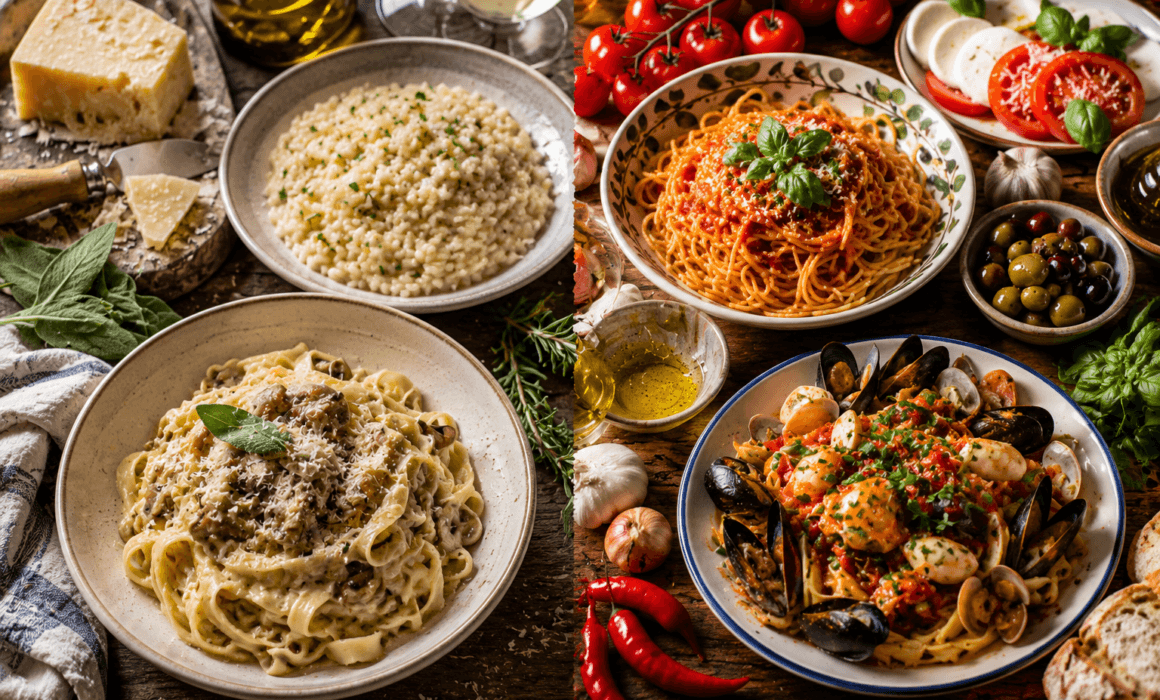
The Difference Between Northern and Southern Italian Cuisine
In Milan and in Naples, Italian cuisine is not the same thing; it’s not even the same language. That’s what people don’t get about Italian food. There were 20 regions and each one had its own weather, soil, and history that predated the kitchen, predated even the word. Pass a Neapolitan menu to a Milanese cook and watch them feel out of place.
So the north-south split runs deeper than butter against oil. Geography wrote the rules first. It decided what grew, what got raised, what was salted away for winter, what a cook grabbed without looking. The north came up around the Alps and the Po Valley, all cold air and green pasture and cows. The south came up on the Mediterranean instead, on sun and salt water and volcanic ground, with Greeks and Arabs and Spaniards passing through and leaving dinner behind them. Same country. Two appetites that barely speak.
Northern Italian Cuisine
The north cooks rich, and the land is why. Cold winters, wide fertile plains, good grazing. That’s cattle country, and cattle give you butter, cheese, and meat that sits on the stove half the day. Lombardy and Piedmont ran with it, rice and butter and mushrooms, plus truffles the weeks they show up.
Butter does what oil does down south. Not always, mind. Liguria presses beautiful oil, the lakes have their own habits. But dip a spoon in a northern pan and butter’s usually what you find.
Cheese turns up in everything up here. It melts into the risotto, streaks through the sauce, gets grated over the top on the way out of the kitchen. The pasta’s usually fresh too, egg and soft flour, soft enough to wrap around a filling, which is how Emilia-Romagna made its name on tortellini and ravioli. And then rice. Down in the Po Valley they flood the fields for it, and a good risotto pulls just as much weight at the table as any bowl of pasta.
What is Northern Italian Cuisine Known For?
Risotto’s the one to know first. After that, polenta, fresh egg pasta, the stuffed shapes. Butter instead of oil, cheeses aged till they’re sharp, beef and veal on the heavier plates, and mushrooms and truffles once autumn comes in. Order osso buco or tagliatelle al ragù and the north is right there on the plate.
Southern Italian Cuisine
The south is Mediterranean through and through. Oil, tomatoes, vegetables, herbs, fish, wheat. The sun ripens things the north only dreams about, and the sea keeps the kitchen full. Then layer on a few hundred years of foreign rule, and you get food with a long memory baked into it.
This is the Italy the rest of us think we know. Naples made pizza. Stack tomato pasta and mozzarella and everything slicked in good oil on top, and you’ve got the food that packed a bag and travelled.
But don’t stamp “tomato” on the whole south and walk off. Puglia lives on greens and wheat. Sicily cooks its entire complicated past onto one plate. Calabria brings the fire. Campania sits on black volcanic soil with the boats coming in behind it.
What is Southern Italian Cuisine Known For?
Oil and tomatoes, first and last. Then fish off the coast, vegetables straight from the sun, dried durum pasta, soft mozzarella, and the chilli and citrus the north never quite bothers with.
Northern Italian Cuisine Vs Southern: The Main Differences
Want it quick? Open the pantry and look.
North leans on butter and dairy, plus fresh egg pasta, rice, polenta, beef, aged cheese, and sauces that come together with cream or meat. South leans the other way, on olive oil, dried wheat pasta, seafood, vegetables, and tomato, with sauces built on oil or tomato. That’s the shape of it.
Good as a map. Hopeless as a fence. The regions don’t run separate kitchens, the ingredients wander across every line anyone tries to draw, and central Italy soaks up most of the middle.
Ingredients And Flavours: Northern Vs Southern
The fat is the telltale sign. In the north it’s butter, and you can feel it as that rich fattiness in the right risotto, the cheese adding the salt. In the south, the starting point is the olive oil, which is more delicate and fresh, while the taste is derived from everything else: tomato, garlic, chillies, some fresh herbs, a squeeze of lemon, the fish that was swimming in the sea that very morning. The north will give you richness, the south will give you freshness.
Pasta says it twice. The north made its name on fresh egg dough. The south made its name on dried durum, which is the whole reason Puglia’s orecchiette chews the way it does. Neither rule holds clean, of course. Fresh pasta turns up south of Rome all the time.
Sauces close the argument. North goes ragù, butter, cream, cheese, meat. South goes tomato, oil, vegetables, seafood, chilli. Then Liguria makes pesto, a northern sauce that’s basically basil and oil, and Sicily plates something as heavy as anything up north. So much for clean lines.
Popular Northern Italian Dishes To Try
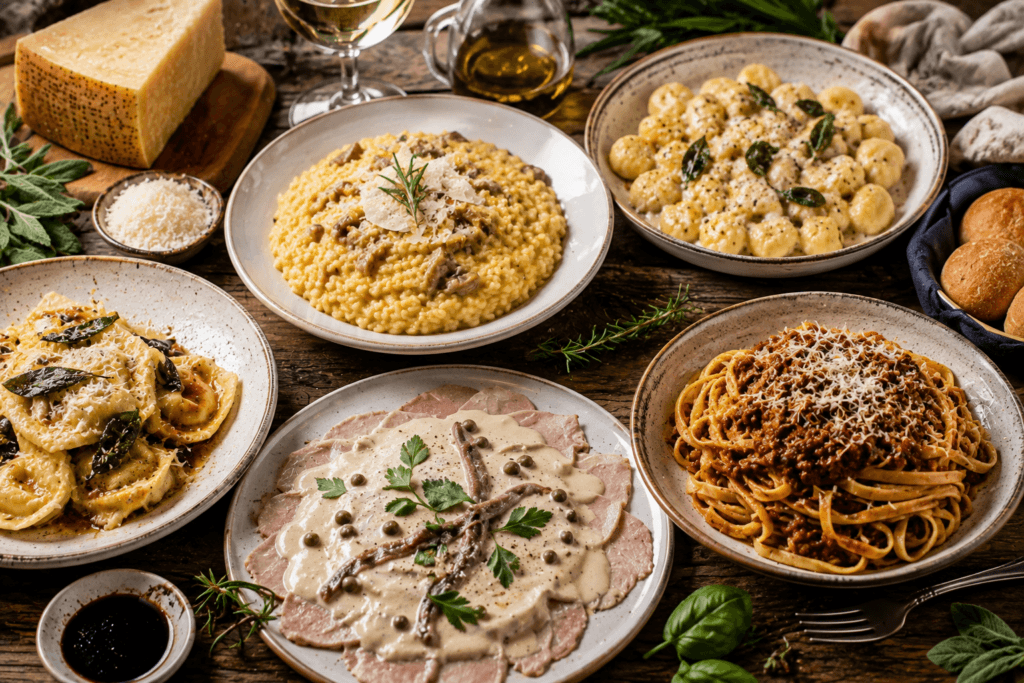
Risotto alla Milanese can be regarded as the embodiment of the northern region served in a bowl. It contains rice, saffron, butter, broth, and cheese. Each serving tastes like Lombardy’s dairy landscape, which is exactly what was meant to be conveyed. There is also tagliatelle al ragù. The reason why Emilia-Romagna is so sensitive about its fresh pasta becomes evident once the wide ribbons are used as containers for sauce that has been stewing since lunchtime.
Osso buco is the smart one. Get a cheap cut of veal shank, braise it for hours until it becomes tender and people start having heated discussions about whose grandmother cooks it best. And Milan pairs it nicely with saffron risotto. When climbing up into the mountains, polenta takes the last place with mushrooms or melted cheese on top of it.
Experience Italian Cuisine in Toronto
You don’t need a plane to taste both Italies. One table in Toronto does it.
BLU Ristorante on King Street West works both ends instead of picking a side. Chef Eric Bucher and his crew send out handmade pasta with a northern hand, then swing south for the bright, oil-and-tomato plates. The à la carte menu shifts with the season. The tasting menu walks the whole country in one sitting.
The Bottom Line
North against south comes down to geography, farming, weather, and a few thousand years of habit doing what habit does. North tips toward butter, dairy, egg pasta, rice, polenta, meat, aged cheese. South tips toward oil, tomato, wheat, vegetables, seafood, herbs, citrus, chilli.
Here’s the part worth keeping. There was never one Italian cuisine to rank in the first place. It shifts region to region, town to town, sometimes one street to the next. The north isn’t only creamy. The south isn’t only red.
FAQs
What is the difference between Northern and Southern Italian cuisine?
It really comes down to fat. Everything else follows from that one choice. The north cooks in butter and leans on dairy, egg pasta, rice, and meat that’s braised low and slow, because the winters are cold and the flat northern plains are made for raising cattle. The south starts with olive oil instead, built on tomatoes, wheat, vegetables, and fish, one grown by the sun, the other pulled from the sea. Centuries of cooking apart turned that difference into something permanent.
What is Northern Italian cuisine known for?
Firstly, risotto, because rice is cultivated in the Po Valley and not in any other area of Italy. Secondly, polenta, and stuffed egg pasta, such as tortellini and ravioli, which need much effort to be prepared by hand. Butter takes the place of the oil used in the south. Also, the large aged cheeses of Parmigiano and Gorgonzola, lots of beef and veal for slow cooking dishes, and mushrooms and truffles when the fall comes.
What is Southern Italian cuisine known for?
Olive oil and tomatoes first and foremost. Those two are responsible for doing most of the hard work. In their midst you get the fresh produce from the sea, vegetables that ripen fast in the warm sun, pasta made from durum wheat and fresh mozzarella cheese. And then the flavors which the northern Italians often forget about, chilli for a spicy kick, lemon for the freshness and herbs in abundance. It is the Italy that most foreigners imagine when they hear the word “Italian” because it was brought overseas by the southern Italians.
What are some popular Northern Italian dishes?
Leading the way is Risotto alla Milanese, that saffron-yellow and creamy dish that comes right from Lombardy. Next is Osso Buco, a cooked-to-shreds veal shank traditionally served side by side with the Risotto. Then there’s Tagliatelle al Ragù, which is one of the most traditional dishes of Emilia-Romagna region and consists of pasta ribbons designed to hold up the meat sauce. To complete our meal, we’ll order tortellini, a portion of polenta, and panna cotta. And not forgetting about Ligurian pesto made of pure basil and olive oil.
What are some popular Southern Italian dishes?
Neapolitan pizza is the classic choice, and southern Italy does it right, with just a few quality ingredients and not much more to cover for. There is also spaghetti alle vongole, clams and pasta and garlic and olive oil – very fishy, very delicious. The orecchiette con cime di rapa is an example of Puglia in a plate – pasta that looks like little ears served with some bitter greens. Then there is pasta alla Norma, which combines tomato and eggplant from Sicily, and arancini, Caprese, and caponata complete the menu.
How do Northern and Southern Italian cuisines differ in ingredients and flavors?
The north builds flavour in layers. Butter, aged cheese, cream, and meat cooked slowly until the taste turns deep and warming. The south goes the other way. It starts with olive oil and pulls brightness out of tomatoes, seafood, herbs, lemon, and chilli, so the plate lands lighter and fresher. Richness against brightness, more or less. The pasta splits on the same line, fresh egg pasta up north, dried durum wheat down south.
Where can you experience Italian cuisine in Toronto?
BLU Ristorante on King Street West is definitely a great choice, considering that it has something to offer from both sides of Italy and not just the other. The executive chef of BLU, Eric Bucher, prepares authentic pastas with influences of the northern part of Italy along with those dishes which have oil and tomatoes and have influences from the southern parts of the country. BLU has got a seasonal à la carte menu as well as a tasting menu for the complete experience, an award winning dining room as well as live music most weekends.