
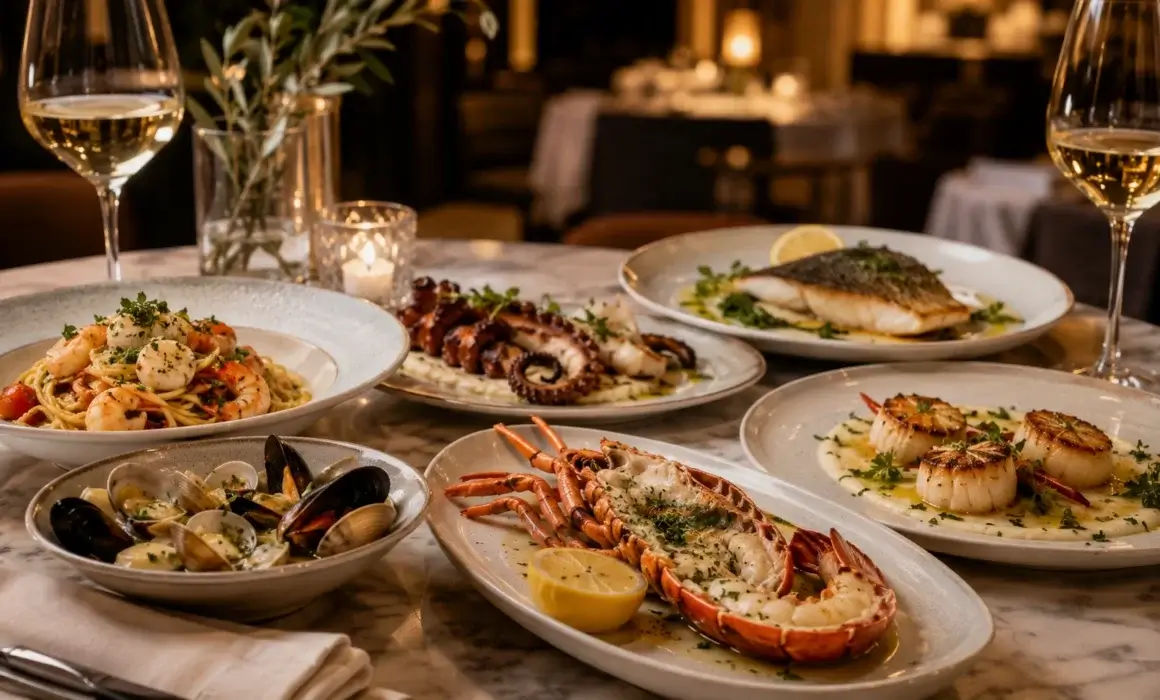
Italian Seafood Dishes Every Fine Dining Guest Should Try
Order seafood at an ambitious Italian place and what turns up can look almost too plain. A small heap of clams. A whole fish with a wedge of lemon and not much else. That plainness is deliberate, and it takes more nerve than a busy sauce ever would. Good clams don’t need rescuing.
So if this part of the menu is new to you, here’s a run through the dishes worth ordering, the ones that show what real Italian seafood dishes look like at the top end.
We’ve also put in how to size up an Italian seafood restaurant once you’re sitting down, the kind of place BLU Ristorante aims to be on King Street West in Toronto’s Theatre District, where the fish and the house-made pasta get equal billing.
Start Raw, or Start Fried
Begin with crudo. It’s Italy’s version of raw fish done its own way, sliced thin, hit with good oil, a squeeze of citrus, a little coarse salt, and that’s the dish. The fish has to be faultless or the whole thing falls flat, which is why a kitchen that’s sure of its supplier tends to lead with it.
The other opener I’d push you toward is fritto misto, a jumble of fried calamari, shrimp and small fish with lemon on the side. When it’s right it’s barely greasy at all, the coating thin enough to crackle. Cheap seaside food, basically, cooked with proper attention.
A few more starters worth a look while you’re reading the top of the menu:
- Oysters and other raw shellfish, left alone so the sea speaks for itself
- Insalata di mare, a cool salad of octopus, squid and shrimp with oil and lemon
- Sarde in saor, the Venetian sardines done sweet and sour with onions and pine nuts
- Cozze, mussels opened in white wine and garlic, with bread to mop up what’s left
The Pasta and Rice You Came For
Spaghetti alle vongole first. It’s a Naples staple, clams and garlic and oil and a splash of wine, and it’s the dish I’d judge a place on before anything else. After that, linguine allo scoglio, the “pasta of the rocks,” piled with mussels, clams and shrimp and sometimes a little tomato underneath. Generous stuff.
Risotto ai frutti di mare belongs here too. Every grain ends up tasting of the shellfish it cooked with, which sounds straightforward and almost never is. Get one where the rice still has a bit of bite and you’re in good hands.
The Regional Showpieces
Every coastline in Italy guards its own big seafood dish. A few worth knowing by name:
- Cacciucco, from Livorno in Tuscany. A dark, tomato-heavy stew, traditionally five kinds of fish and shellfish for the five Cs in the name.
- Brodetto, the Adriatic cousin over in Marche and Abruzzo. Lighter, brothier, and different in practically every town that makes it.
- Pesce spada, grilled swordfish, the pride of Sicily and Calabria, usually finished with lemon, oregano and oil.
When a menu lists these properly instead of hiding them inside a vague “seafood medley,” you’re looking at authentic Italian seafood.
How Italian Chefs Keep It Simple on Purpose
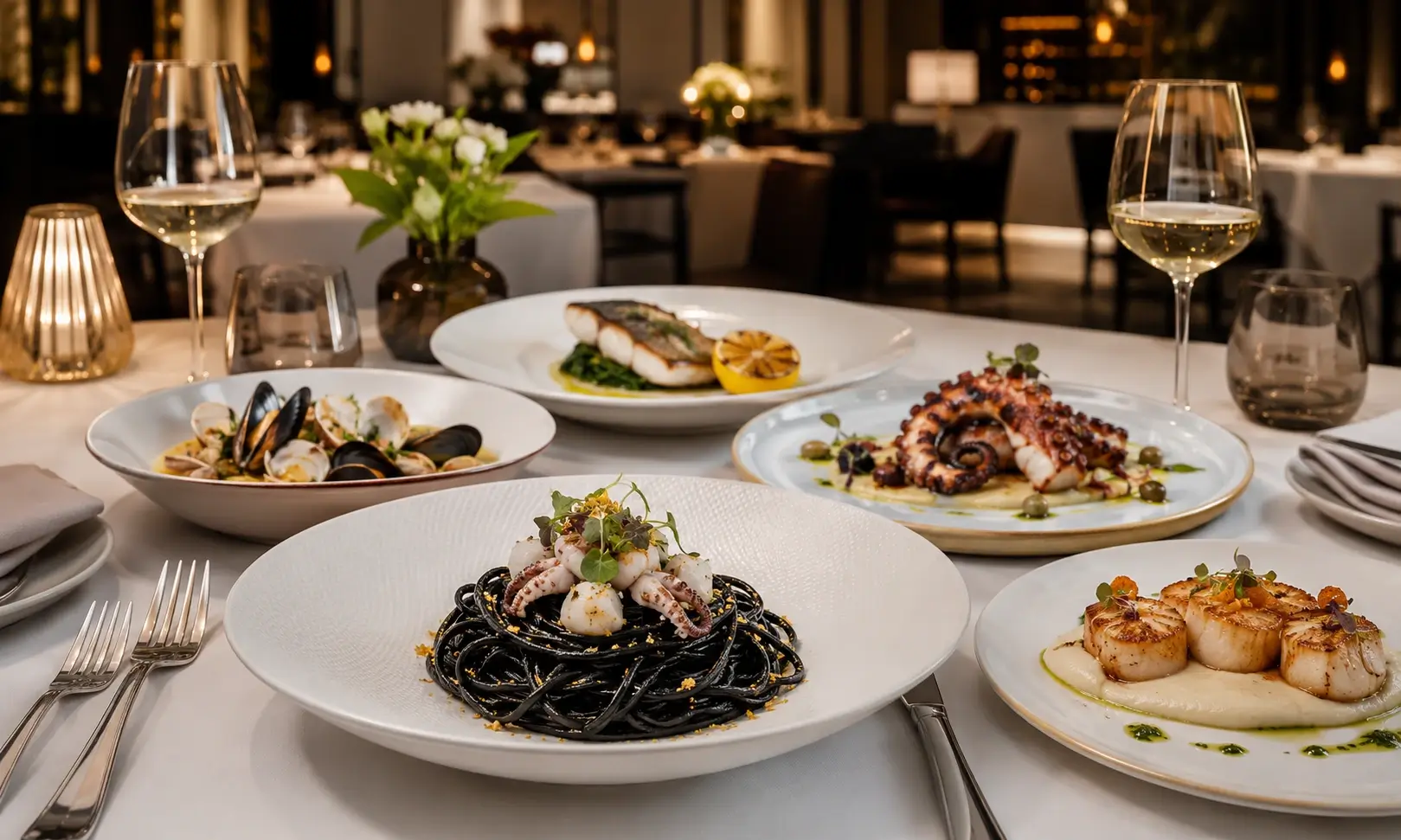
Talk to an Italian chef about cooking fish and you’ll notice how much of it comes down to leaving things be. Nobody’s trying to reinvent a branzino. You put a whole one over the grill or into a hot oven with some herbs, a bit of lemon, a slick of oil, and honestly that’s most of it. Every so often it gets packed in salt instead, which sounds strange until you’ve had it.
Squid and octopus are the fussy ones. You cook them fast and hard, or you let them go slow for a good while. Land somewhere in the middle and you might as well be serving erasers.
Notice how rarely a heavy sauce shows up. That restraint is the whole game in premium seafood dining. The better the catch, the less anyone in the kitchen feels the need to prove.
What to Drink With It
Italian whites and Italian seafood have shared a table for centuries, so most of the pairing is common sense. The coastal whites do the heavy lifting:
- Vermentino from Sardinia or Liguria, bright and a touch salty, made for clams and grilled fish
- Gavi or Verdicchio, clean and mineral, right at home with crudo and delicate pasta
- Fiano or Falanghina from the south, rounder in the glass, good against the richer stews
Fried plates like fritto misto want bubbles, a Franciacorta or a Prosecco, to cut through the fry. And a grilled swordfish can take a chilled light red such as a Sicilian Frappato without the fish disappearing under it. Any decent fresh seafood restaurant will have someone on the floor who can steer you to the glass that fits.
Seafood at BLU Ristorante
That’s the thinking behind the seafood at BLU Ristorante, at 214 King Street West. Fresh fish and shellfish get the same care as the pasta made in house, with an Italian wine list built for exactly these pairings. Taste authentic Italy.
Frequently Asked Questions
Which Italian seafood dishes pair best with fine Italian wines?
Whites, mostly, and the coastal ones win. A saline Vermentino beside clams or grilled sea bass is about as safe as pairing gets. Lighter things, crudo and delicate pasta, want something leaner like Gavi or Verdicchio. The heavier stews can carry a rounder Fiano. Fried seafood breaks the pattern and asks for bubbles, a Prosecco or Franciacorta to cut the fat, and grilled swordfish is the odd fish that takes a red, as long as it’s light and you’ve kept it chilled.
How do I choose the best Italian seafood restaurant for a fine dining experience?
Watch what the kitchen refuses to hide. Whole fish on ice. A specials list that reads differently on a Tuesday than it did the Friday before. A server who names the market or the boat without you having to ask. That tells you more than anything printed on the menu. Simple plating is always considered another positive aspect for the restaurant because chefs leave the fish alone only if it is able to carry it.
Which Italian seafood dishes are considered classic regional specialties?
Geography does most of the work. Cacciucco is Livorno’s, a Tuscan port stew that’s meant to use five kinds of fish for the five c’s in its name. Brodetto is the Adriatic answer, thinner, and argued over from one town to the next. Naples has spaghetti alle vongole. Venice keeps sarde in saor. Go far enough south, to Sicily and Calabria, and it comes down to swordfish on a grill.
What are the most popular seafood appetizers at an Italian seafood restaurant?
Crudo first, followed by oysters, followed by fritto misto more often than not. Then, an octopus and squid salad, mussels cooked in wine with their shells opened up, and regional specialties such as those tangy sardines from Venice with onions and pine nuts. All light, and for good reason. It is the responsibility of the openers to prove that the fish is fresh before the main courses come out.